


Blogs
Toolholder Tapers And Sizes Determine Rigidity And Accuracy Of Machining
The toolholder taper is the most important point of contact that determines the rigidity and accuracy of the machining. A 7/24 taper refers to the taper angle – 30, 40, and 50, tapers are all 7/24 tapers. A 7/24 taper is used to provide a good interface between the machine spindle and the toolholder without locking it in the spindle.
TYPES AND SIZES OF TOOLHOLDER TAPERS
There are several different types and sizes of toolholder tapers to accommodate different machine spindles:
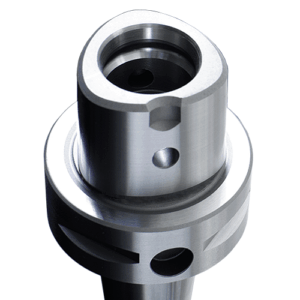 PSC Polygonal: Designed in the 1990’s, the polygonal shape, with standardized interface as per ISO 26623 in 2008, provides extreme stability and increased rigidity, tool deflection during machining. With double contact on both face and taper, as well as great cross-sectional strength, this interface is unrivaled in terms of high clamping force and bending stiffness. Ideal for all processes both in turning and milling, this enhanced stability is crucial for maintaining precision and achieving high-quality surface finishes. Reduced vibration and improved damping characteristics help prevent premature tool wear, ensuring longer cutting tool life. Polygonal tapers are modular, allowing for quick and easy interchangeability of tools.
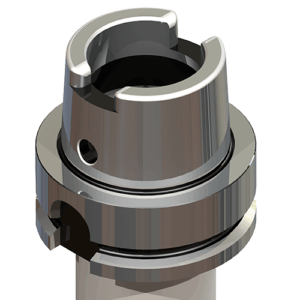 HSK 25, 32, 40, 50, 63, 80, 100, 125, and 160 (Forms A-F): Designed in the late 1980’s and is the most popular taper in Europe – also is the first standardized dual face contact taper.
The HSK dual face contact taper has the highest static and dynamic stiffness and rigidity for greater cutting capability. In fact, it allows for heavy duty machining and prevents Z axis variation at high RPM.
Additional benefits of the HSK dual face contact taper include fastest tool changing capability, highest tool change repeatability, and lower toolholder runout. With expanding hollow taper, the taper and flange maintain contact during spindle growth to increase tool life and surface finish of parts.
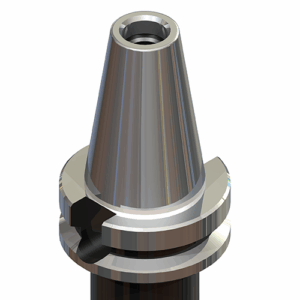 BT 30, 40, and 50: Developed in late 1970’s, it was designed by JIS (Japanese Industrial Standard B6339) as an improvement on the CAT design. A 7/24 taper tool has equal width and depth drive slots, metric pull stud threads, and a ground pilot in the end of the taper to centralize the pull stud. It has an offset flange groove for tool changing and does not require an undercut beneath the flange. BT is now offered in taper plus. Benefits of using CAT/BT dual face contact spindle AND a taper plus toolholder.
Taper plus toolholders provide:
- Outstanding runout accuracy for longer tool life
- Vibration dampening for increased productivity
- High rigidity for smooth and stable cutting
Benefits of using CAT/BT dual face contact spindle AND a taper plus toolholder include higher static and dynamic stiffness and rigidity than standard non dual face contact holders for greater cutting capability. Face contact allows for heavier duty machining. It prevents Z axis variation at high RPM due to the expanding taper of the machine spindle. Taper and flange maintain contact with the spindle taper and face during spindle growth to increase tool life and surface finish of parts. Taper plus toolholders are interchangeable between standard 7/24 taper spindles and dual face contact spindles for greater flexibility.
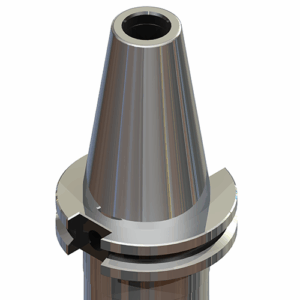 CAT 40 and 50: Developed in late 1940’s and is the most common taper in North America that is made to ANSI/ASE B5.50 spec. A 7/24 taper toolholder has different width and depth drive slots, imperial pull stud threads, and no ground pilot in the end of the taper to centralize the pull stud. It has a centralized flange groove for tool changing and requires an undercut beneath the flange. Europe’s modified version is known as the SK or ISO taper, and is now offered in taper plus – see above.
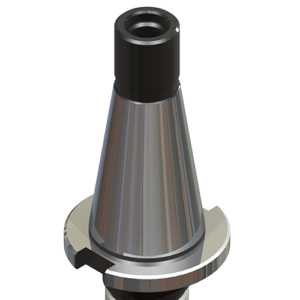 NMTB 40 and 50: Developed in late 1800’s and designed by the National Machine Tool Builders Association (today known as Association for Manufacturing Technology or AMT). A 7/24 taper toolholder with a 1” straight extension on the end of the taper. This taper is held in the spindle by use of a draw bar. There is no groove in the flange for a ATC arm to grip so this holder is loaded by hand.
TAPER SIZE IS DETERMINED BY MACHINE
Toolholder taper size is determined by the size and type of machine:
- 30 taper toolholders: are used on smaller size machine tools. The smaller taper provides less surface contact area with the machine spindle than larger tapers. Therefore, this taper is only used for machines designed for lighter duty work (drilling, tapping, and light milling). For HSK, machines sizes also apply to HSK 25, 32, and 40.
- 40 taper toolholders: are used on medium size machine tools. This is the most common taper and is used most commonly on vertical machining centers. For HSK, machines’ sizes also apply to HSK 50 and 63.
- 50 taper toolholders: are used on larger sized machine tools and most commonly on machines that machine large sized parts. For HSK, machines sizes also apply to HSK 100 and 125.
If you have any doubt on which toolholder taper is ideal for your machine, tap into the expertise of your local Lyndex-Nikken machine tool accessory sales representative.
For more information or to search for products: toolholders, collets