

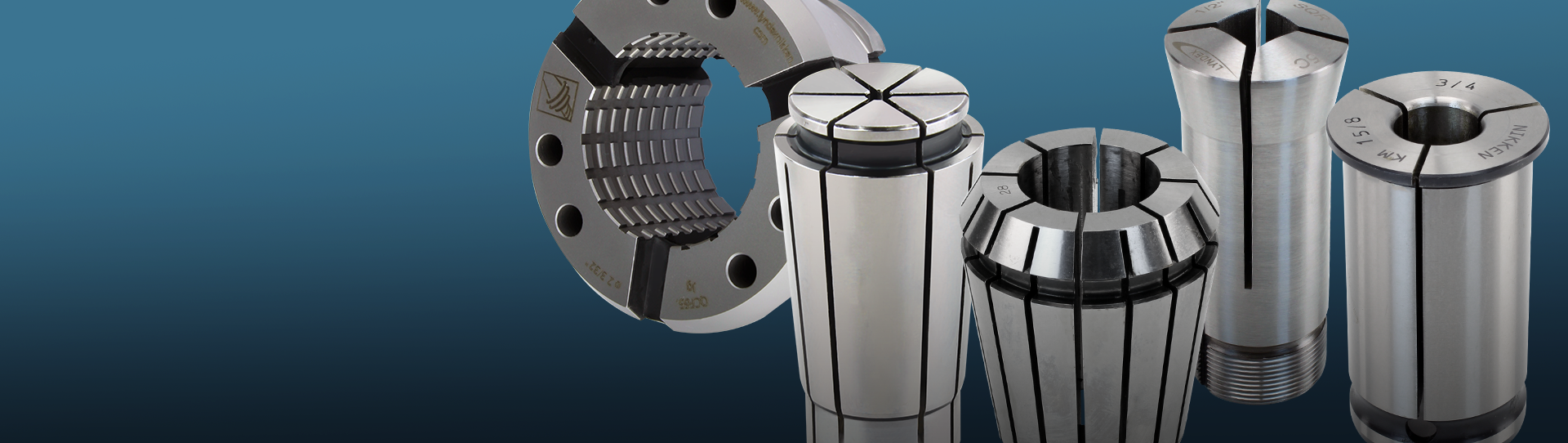
Mill And Lathe Collets







WHAT IS A COLLET?
A collet is a holding device, specifically a subtype of chuck, that forms a collar around the tool or workpiece and exerts a strong clamping force on the tool or workpiece when it is tightened, usually by means of a tapered outer collar.
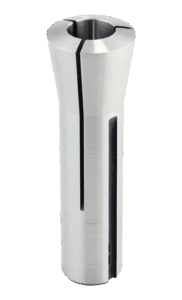 Toolholding collets, such as an R8 collet, are used on a conventional mill. R8 collets are made with a hardened threaded bushing in the back for long life. R8 collets do not collapse so they are best used in applications where a specific tool size is consistently used. They are commonly used in milling machines for processes such as drilling, reaming, and milling with dedicated tool sizes, offering reliability in setups where tool changes are infrequent.
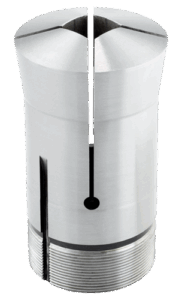 Workholding collets can be 16C collets, 3J collets, or 5C collets. Workholding collets are most commonly used in lathes for holding workpieces or bar stock during turning operations. They are used in applications in job shops to production facilities.
TOOLHOLDING MILL COLLETS
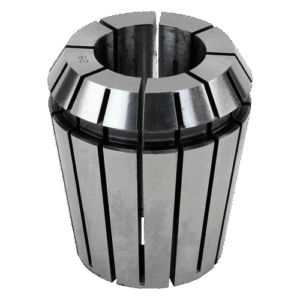 Toolholding collets can hold cutting tools such as drills, chamfer/counterbores, form tools, reamers, taps, or end mills. Over the years as CNC machines evolved, they needed more accurate collets. So, the R8 collet, ER collet, TG collet, and DA collets were developed. The ER collet is a very popular toolholding collet for CNC machines and has become an ISO standard (ISO 15488). Reason being is that the design allows for collapsibility to fit a wide range of tools and applications.
 However, today CNC machine technology is much more advanced, so the demand now for collets has been elevated to achieve high accuracy, high gripping force, compact design, collapsible range, and in a wider series of sizes. There are collets that meet these requirements such as SK collets, MMC collets, KM collets, and VC collets as part of a toolholder assembly.
Manufacturers using toolholder collets may encounter several challenges if the correct collet is not selected, these include:
Precision and Tolerance
Cutting Tool Changes
Tool Size Compatibility
Runout and Balance
Toolholding Force
Compatibility
WORKHOLDING LATHE COLLETS
Manufacturers using workholding collets may encounter various challenges if the correct collet is not selected, these include:
Workpiece Stability
Part Size and Shape Variation
Runout and Concentricity
Quick Changeovers
Accuracy and Repeatability
Compatibility
Ensuring compatibility between collets, workholding systems, and machining equipment is vital. Adapting to different machine types or workpiece configurations may require additional components.
Sourcing toolholding collets or workholding collets from Lyndex-Nikken can help manufacturers address these challenges in order to meet the desired machining specs. Additionally, when purchasing a collet, it is essential to consider the entire toolholder system for compatibility and optimal performance.
VIDEOS: WHY MANUFACTURERS CHOOSE LYNDEX-NIKKEN TOOLHOLDERS & COLLETS
 Watch the toolholder and collet videos to hear and see for yourself how Lyndex-Nikken quality products provide optimal machining solutions.