


Blogs
What is a Static Tool Holder?
Listen to Blog
In CNC turning and lathe operations, static tools play a crucial role in achieving accuracy and repeatability. When the cutting tool is stationary and the part is spinning the tooling used is called static tooling. So, the cutting action is performed by the tool’s static position relative to the workpiece providing stability and precision in machining. This stationary setup allows for consistent tool engagement, excellent surface finishes, and tight dimensional control – making static tooling an essential component for precision turning applications.
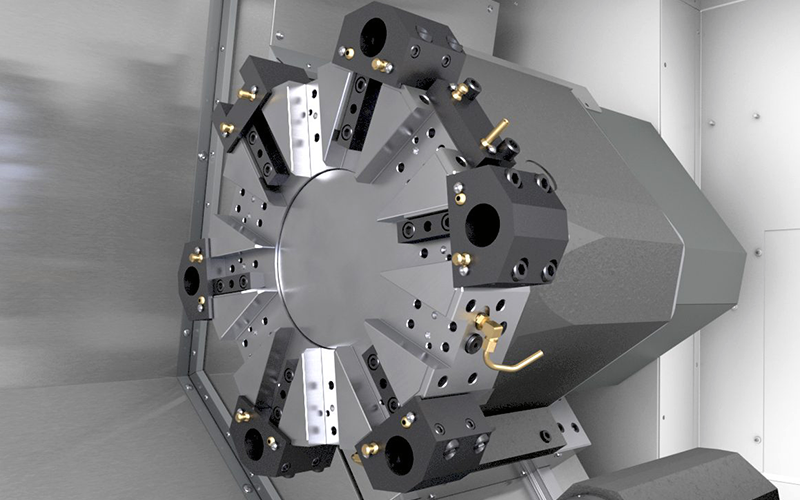
Typical turning operations that can be performed include ID threading, drilling, reaming, boring, OD threading, face grooving, trepanning, facing, grooving, knurling, and parting.
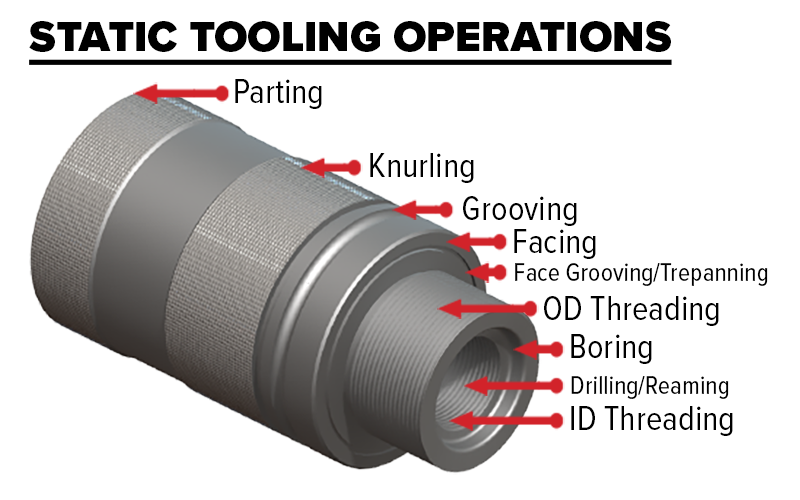
Whether for simple facing operations or complex internal threading, static tools provide the rigidity and control needed for superior machining results. By selecting the proper static tool holder and insert geometry, manufacturers can maximize efficiency, extend tool life, and maintain the high level of precision demanded in modern CNC turning.
For more information or to search for products: live and static tools, solutions for turning centers